


Civil War History

Find old Civil War articles here. We have great newspaper articles about the Civil War check them out today!

The Significance of the Union Victory at Vicksburg
(The National Park Service, 1954)

The great objective of the war in the West – the opening of the Mississippi River and the severing of the Confederacy – had been realized with the fall of Vicksburg.

On July 9 [1863], the Confederate commander at Port Hudson, upon learning of the fall of Vicksburg, surrendered his garrison of 6,000 men. One week later the merchant steamboat Imperial tied up at the wharf at New Orleans, completing the 1,000-mile passage from St. Louis undisturbed by hostile guns. After two years of land and naval warfare, the Mississippi River was open, the grip of the South had been broken, and merchant and military traffic had now a safe avenue to the gulf of Mexico. In the words of Lincoln:


The Father of Waters again goes unvexed to the sea.

1863: The Importance of Chattanooga and East Tennessee
(National Park Service, 1956)

Situated where the Tennessee River passes through the Cumberland Mountains, forming gaps, Chattanooga was called the Key to East Tennessee and Gateway to the deep South. The possession of Chattanooga was vital to the Confederacy, and a coveted goal of the Northern armies. Chattanooga’s principal importance during the Civil War was it’s position as a railroad center.


Click here to print American Civil War chronologies.

The Siege of Vicksburg
(Famous Events, 1913)

A summary of General Grant’s victory at Vicksburgstyle=border:none, Mississippi, during the summer of 1863. It is made clear to the reader how vital the city was to the Rebel’s defensive strategy in that Vicksburg was the last stronghold remaining which served to protect the Mississippi valley; President Jefferson Davis and his Confederates knew well that if the city fell, Texas, Louisiana and Arkansas would be isolated.

Advertisement

Use shortcode [oma_ad position="summary_top"] (or other position) in your theme or widgets to display OMA Promotions here.

A Study of the Gettysburg Address
(The Outlook, 1913)

Jesse W. Weik (1857 – 1930) was one of the earliest of Lincoln scholars.

In preparation for Herndon and Weik’s Life of Lincolnstyle=border:none (1889), he visited every place in Illinois, Indiana and Kentucky where Abraham Lincoln lived; examined the records of all the lawsuits in which Lincoln was engaged, and talked to everyone he could find who knew Lincoln. For thirty years and more he has made a special study of the sources, written and unwritten, of the personal history of President Lincoln.

Lincoln’s Address at Cooper Union
(The National Park Service, 1956)

Before his 1860 address at the Cooper Institute (presently known as Cooper Union) Abraham Lincoln was known in the East chiefly as a rather obscure western lawyer who had gained some prestige a little over a year earlier in the debates with Douglas during the Illinois senatorial contest. The day after the address Horace Greeley’s NEW YORK TRIBUNE remarked:

No man ever before made such an impression on his first appeal to a New York audience.

This speech put within Lincoln’s grasp a chance for the Presidency.


Attached, you will find his very powerful conclusion to the address.


Click here to read about the Confederate conscription laws.

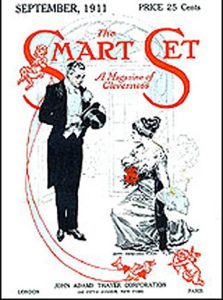
H.L. Mencken: Not Impressed with Lincoln
(The Smart Set, 1920)

As far as culture critic and all-around nay-sayer H.L. Mencken was concerned, Abraham Lincoln was simply another opportunist who fed at the federal trough and he found himself at a loss when it came to understanding the American deification of the man. It seemed that even Jefferson Davis might have had an easier time uttering a few sweet words to describe Lincoln then did the Bard of Baltimore. Yet, there was one contribution Lincoln made that Mencken applauded, the Gettysburg Address:

It is eloquence brought to a pellucid and almost gem-like perfection –the highest emotion reduced to a few poetical phrases. Nothing else precisely like it is to be found in the whole range of oratory. Lincoln himself never even remotely approached it [in other speeches]. It is genuinely stupendous.

(Although, like any unreconstructed Confederates, he thought the argument was all a bunch of rot.)

Advertisement

Use shortcode [oma_ad position="summary_top"] (or other position) in your theme or widgets to display OMA Promotions here.

The Civil War in 1863
(Southern Rebellion, 1867)

Here is a printable chronology of the important events that occurred during 1863, the most slaughterous year of the American Civil War.


The blood flowed deep in 1863 and the year proved to be a decisive one for the Union Army as the Rebels were driven out of Pennsylvania – at the same time the Confederate defense of Vicksburg (Mississippi) collapsed. General Sherman continued his march to the sea while the women of Mobile (Alabama) cried out for bread. In the North, President Lincoln suspended habeas corpus and draft riots broke out in Boston and New York City.

The Civil War in 1862
(Southern Rebellion, 1867)

A printable chronology of the major events that took place during 1862, the second year of the American Civil War.

The high hopes that both sides enjoyed during the previous year had entirely vanished, and were replaced instead by a sense of grim determination as all concerned rolled up their sleeves and faced a war that had no end in sight. The year began with news of two Missouri Senators who were expelled from that body for their Rebel sympathies; among the many military engagements that marked that year, the most legendary were the battles of Shiloh, Fredericks burg and Antietam. Monitor and Merrimac had at it, General McClellan was replaced by General Halleck, and the year ended with Union General William Tecumseh Sherman occupying the city of Savannah.

The Civil War in 1861
(The Southern Rebellion, 1867)

A printable chronology of the important events that occurred during the first year of the American Civil War: 1861.

In April of 1861 the first gallons of blood begin to pour and as December slowly rolled around, news spreads of a battle fought by one Native American tribe loyal to the Union against another tribe siding with the Rebels. For the next two years the great momentum of the war would be on the side of the Confederacy.


Click here to read about the heavy influence religion had in the Rebel states during the American Civil War.

Advertisement

Use shortcode [oma_ad position="summary_top"] (or other position) in your theme or widgets to display OMA Promotions here.

The Lincoln – Douglas Debates Observed
(The National Park Service, 1956)

These four paragraphs first appeared on the pages of THE CHICAGO TRIBUNE and were written by a reporter named of Horace White at the conclusion of Lincoln – Douglas debates of 1858. The journalist did a fine job in describing the excitement at the debates and the spirit of the participating candidates.

Douglas ended in a whirlwind of applause…and Lincoln began to speak in a slow and rather awkward way. He had a thin tenor, or rather falsetto voice, almost as high pitched as a boatswain’s whistle.


The debates resulted in a close election that returned Douglas to the U.S. Senate and Lincoln to his law practice.

The Great Civil War Battles
(Pageant Magazine, 1958)

The second portion of Bruce Catton’s article (see above) concerning the necessary knowledge required in order to justifiably call your self a Civil War Buff was this short piece listing the greatest battles of the war. Accompanying the five brief thumb-nail summaries is a map of the South Eastern U.S., highlighted with red stars, which serve to identify where the blood poured.

General John Rawlins: General Grant’s Chief of Staff
(The Literary Digest, 1917)

Attached is a review of a biography covering the life and times of Brigadier General John Rawlins (1831 – 1869). Rawlins distinguished himself as the Chief of Staff to General Ulysses S. Grant during the American Civil War. It is explained that the two met while Grant was engaged as a sales clerk at a leather shop which was owned by Rawlin’s brother; at the outbreak of the war, in 1861, Grant’s skill as an officer became clear to many and with each promotion he was able to secure Rawlins’ certain advancements in grade. By 1863 Rawlins was promoted to Brigadier General. During Grant’s term in the White House, Rawlins served as Secretary of War.
The author of the book, Major-General James Harrison Wilson, is remembered as the man who captured Confederate President Jefferson Davis in flight; the review of his autobiography can be read here.

Advertisement

Use shortcode [oma_ad position="summary_top"] (or other position) in your theme or widgets to display OMA Promotions here.

British Praise for General Grant
(Literary Digest, 1897)

When the Grant Memorial in New York City was first presented to the public during the Spring of 1897, few could have guessed that one of the places most excited about the monument would be Great Britain. An American journalist posted to that distant isle filed the attached article, quoting from as many as eight British newspapers that saw fit to liberally sprinkle their pages with a variety of laudatory adjectives in praise of General Grant:

He sprang from the people, he was the son of a plain farmer, and had ‘driven team’ in his day. Yet he was also a trained soldier. But, from first to last, he was merely the citizen in arms, and with the mighty array he commanded, he resumed his position in civil life as soon as his work was done…The giants of the Civil War were probably the last of a great race.


Click here to read Grant’s recollection of the first time he met President Lincoln.

Grant at Shiloh
(Famous Events Magazine, 1913)

A summation of the 1862 Battle of Shiloh:

Bull Run, the first Southern victory of the war, was followed by others. Nor did the tide of battle turn in favor of the North until General Ulysses S. Grant won in Tennessee the hard fought struggle of Shiloh. This was in April of 1862. Grant first besieged and captured Fort Donelson, then advanced until he was suddenly assailed at Shiloh by the entire army which the Confederates had gathered in the West…

Advertisement

Use shortcode [oma_ad position="summary_top"] (or other position) in your theme or widgets to display OMA Promotions here.

Lincoln Remembered
(National Park Service, 1956)

Shortly after Abraham Lincoln’s assassination, William H. Herndon (1816 – 1891), Lincoln’s law partner, devoted much of his life to collecting as much original source material on the man as he could possibly find. Indeed, scholars have pointed out that there never would have been an accurate word written about Lincoln if not for the efforts of Herndon. The following description of Lincoln is from a lecture delivered by Herndon in 1865.

The Battle of Kenesaw and the Goodness of Colonel Martin
(Confederate Veteran, 1922)

Here is a segment from a longer article found on this site that recalled the history of boys who had enlisted in the Confederate cause – this short paragraph tells the story of a Rebel colonel, W.H. Martin of the 1st Arkansas Regiment, who called out to his opposite number in the Federal ranks during a lull in the fighting for Kenesaw Mountain and allowed for a truce so that the immobilized wounded of the Northern infantry would be rescued from a fire that was spreading in no-mans-land.

The Humanity of Dick Kirkland
(Coronet Magazine, 1957)

He led no charge, won no thrilling victory. But men honor his memory because, in the midst of slaughter, he dared death to bring solace to his wounded foes… He was Sergeant Richard Kirkland of the 2nd South Carolina Volunteers.


We honor him on this page because he was one of the few men in war who simply refused to submit himself entirely to the savage spirit of war and surrender all sense decency.


On a cold Virginia day in 1862, Kirkland and his Carolinians were locked in a bitter struggle with Federal infantry. It was not a good day for the men in blue, and many of their wounded lay on the ground crying out for help. During the few lulls in the firing Kirkland decided he could take their cries no more and ventured out onto the killing ground bringing water and blankets:

The Union men were thunderstruck when a Confederate soldier, laden with canteens, suddenly climbed into view. Their surprise was probably what saved Dick, for in a few seconds he had sprinted to the nearest wounded man, given him water, covered him with an overcoat, and gone on to the next… Dick was the talk of both armies that day.


Click here to read about the heavy influence religion had in the Rebel states during the American Civil War.

Advertisement

Use shortcode [oma_ad position="summary_top"] (or other position) in your theme or widgets to display OMA Promotions here.

Scroll to Top