Author name: editor

Benito Mussolini Interview 1938 | Fulton Oursler Interview with Mussolini 1938 | Liberty Magazine Mussolini Interview 1938
1938, Benito Mussolini, Liberty Magazine

‘I Am Not a Dictator”
(Liberty Magazine, 1938)

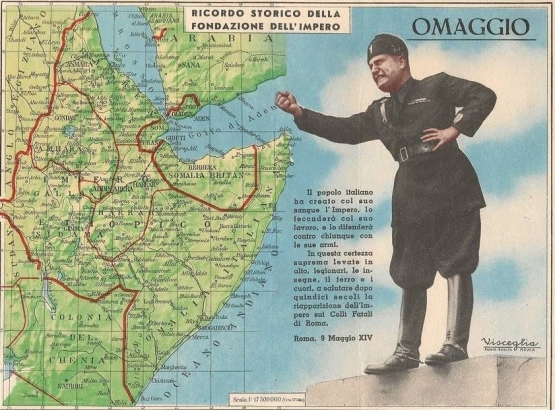
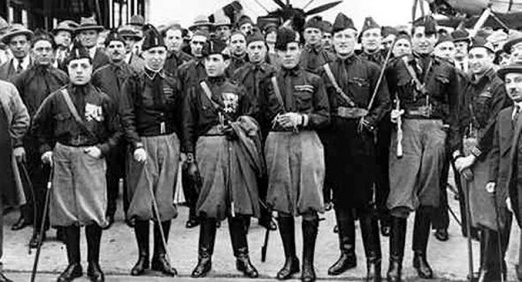
In 1938, Fulton Oursler (1893 – 1952), editor of Liberty, crossed the Atlantic Ocean in order to ask Benito Mussolini why he invaded Ethiopia and to get his thoughts as to whether there would be peace in Europe. We can’t say that Il Duce gave very thorough answers to those questions, but Oursler did find out what was eating Mussolini:

Why is it that the people of the United States are so against Fascism? What is the matter with them? Why is the whole press so bitter against Fascism? Can you answer me that?

Ethiopians Massacred by Italian Fascists 1937 | Mussolini Mass Execution in Ethiopia
1937, Ethiopia, Pathfinder Magazine

Massacre
(Pathfinder Magazine, 1937)

Late last week 30 prominent Ethiopians were tried as ringleaders in the attempted assassination [of Marshal Rodolfo Graziani]. They were to serve as public examples of Italy’s determination to rule over her new African domain. All other natives found in possession of arms were shot by Fascist firing squads, more than 1,000 terrified men being mowed down in a bloody Mussolini-ordered revenge.

Advertisement

Use shortcode [oma_ad position="summary_top"] (or other position) in your theme or widgets to display OMA Promotions here.

19th October 1935 League of Nations Imposes Economic Sanctions on Italy
1935, Ethiopia, The Literary Digest

Italy Condemned
(Literary Digest, 1935)

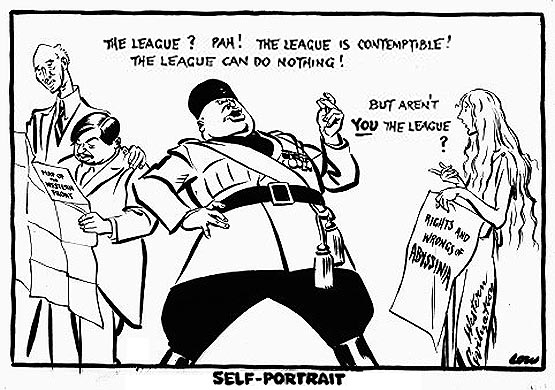
Any of us born after 1945 have seen this before: the United Nations condemns a dreadful dictator and sends him a mean email and the dictator deletes it (Sadam Hussein was condemned 17 times by the U.N.) – but this was the first time it happened in the Twenties. The League of Nations condemned Mussolini for the Ethiopia invasion, and Mussolini couldn’t have cared less.

Resistance of Ethiopians to Italian Occupation | Italian Occupation of Ethiopia Resisted 1938
1938, Ethiopia, The Literary Digest

The Passive Resistance of the Native Population
(Literary Digest, 1938)

Recently former Viceroy Graziani cabled Mussolini that ‘my surveys demonstrate that tranquility is absolute. The native population is with Italy.’ But a writer in the Tribuna of Rome admitted that ‘nobody must delude himself with the idea that the former Shoan-Galla ruling caste have resigned themselves to the loss of their privileges and have welcomed our Italian Empire.’

Italian Occupation of Ethiopia 1937
1937, Ethiopia, The Literary Digest

‘Ethiopia Smolders”
(Literary Digest, 1937)

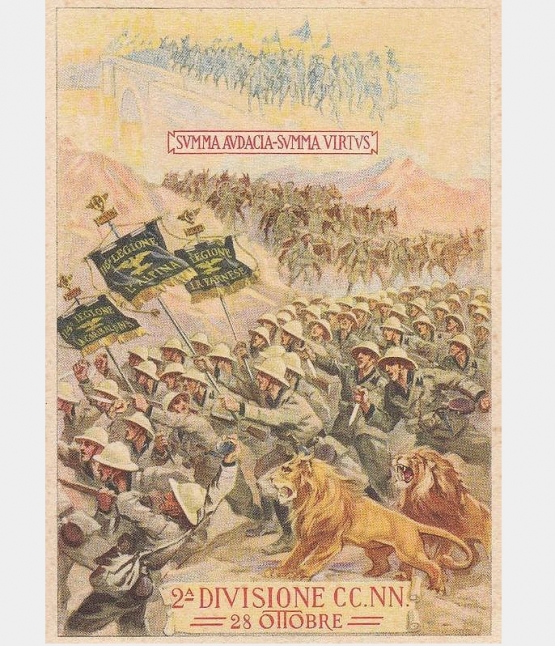
Italy’s financial and human resources are being heavily drained, not only by a vast [Roman] road-building program in the conquered kingdom, but particularly by the efforts of 200,000 men who compose the fascist expeditionary force to pacify a warlike population of 9,000,000 natives in a territory larger than France and Italy combined.

Advertisement

Use shortcode [oma_ad position="summary_top"] (or other position) in your theme or widgets to display OMA Promotions here.

'War Fears in Italo-Ethiopia Rift'' (Literary Digest, 1935)
1935, Ethiopia, The Literary Digest

‘War Fears in Italo-Ethiopia Rift”
(Literary Digest, 1935)

A report on the start of the Italian adventures in Ethiopia:

The dispute arose over alleged trespasses by Ethiopians on Italian possessions in Eritria and Italian Somaliland, in East Africa.

A solemn declaration of Abyssinia’s peaceful intentions toward Italy was read in broken but emphatic Italian to representatives of the foreign press in Rome by the nervous and impassioned Negradsa Yesus, Abyssinian Charge d’ Affaires. In fervent tones he asserted that Abyssinia’s intentions were so peaceful ‘that if Italy remained without a single soldier and without a single gun in her colonies, Abyssinia would not touch a single stone.’


Mussolini explained why he invaded Ethiopia in this article…

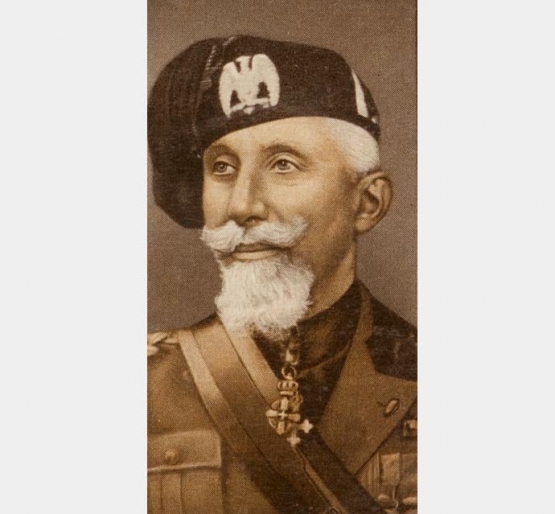
Italian War on Abyssinia | Emilio De Bono Article 1937
1937, Ethiopia, The Literary Digest

The Italian Conquest of Ethiopia
(Literary Digest, 1937)

A column about Mussolini’s Minister of Colonies, Emilio De Bono (1866 – 1944) and his popular book, La Preparazione E Le Prime Operazioni:

Last week, with the appearance of a third printing, following a sold-out second edition (both of which were marked for publication in 1937), Italians at home and abroad noted certain deletions, including the passage which intimated that Mussolini had been on the point of abandoning his campaign in the face of British armed intervention.

Advertisement

Use shortcode [oma_ad position="summary_top"] (or other position) in your theme or widgets to display OMA Promotions here.

The Wartime Leadership of Woodrow Wilson (Vanity Fair Magazine, 1918)
1918, Vanity Fair Magazine, Woodrow Wilson

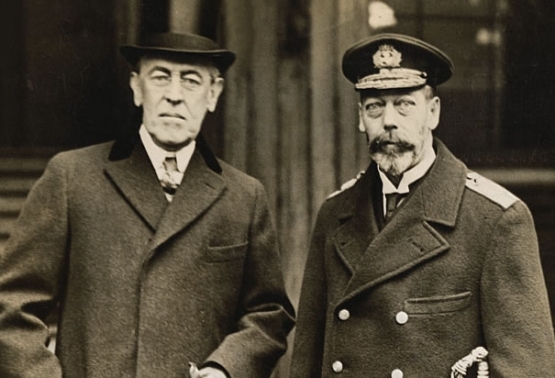
The Wartime Leadership of Woodrow Wilson
(Vanity Fair Magazine, 1918)

There are various reasons for Woodrow Wilson’s present preëminence. For one thing he represented, for years, the rights, under International Law, of the nations which were not in the war, and whatever his private opinions may have been as to an attitude of strict legality….Then, further, he is at the head of a nation which had no selfish motives in coming in. America wants for herself no new territory, no new spheres of influence. France wants Alsace and Lorraine. Italy wants ‘Italia Irridenta’. England, though she declared war to save France from being overrun through losing the channel ports, has gained incidentally all German Africa and the German islands of the South Seas…


Click here to read a 1913 article about Woodrow Wilson’s Under Secretary of the Navy: Franklin Delano Roosevelt…

Anti-Prohibition argument | HL Mencken on disasters of Prohibition | Prohibition and 1920s Popular Culture
1921, Prohibition History, The Smart Set

The Damage of Prohibition
(The Smart Set, 1921)

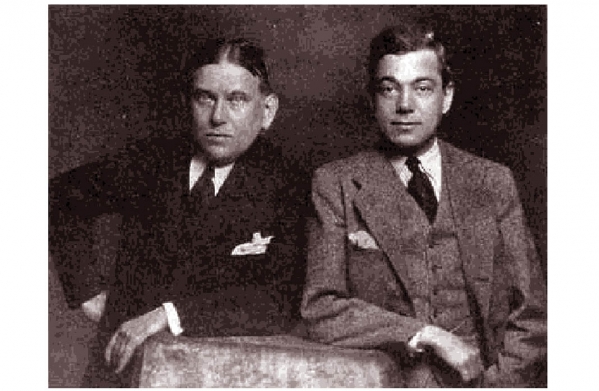
Attached is an editorial that was co-authored by George Jean Nathan and H.L. Mencken from their reoccurring column in The Smart Set: Répétition Générale. This brief column sought to expose the damages inflicted upon the country by the guardians of the national virtue and their bastard children, Prohibition and the Volstead Act, which will primarily serve to promote the wide (though illegal) distribution of all the poorest distilled spirits concocted in the most remote frontiers of civilization.

Advertisement

Use shortcode [oma_ad position="summary_top"] (or other position) in your theme or widgets to display OMA Promotions here.

Advertisement

Use shortcode [oma_ad position="summary_top"] (or other position) in your theme or widgets to display OMA Promotions here.

California Farm Labor (Pageant Magazine, 1952)
1952, Agricultural Labor, Pageant Magazine

California Farm Labor
(Pageant Magazine, 1952)

With the bad old days that spanned that period between October, 1929 through August, 1945 seen only in the rear view mirror, many Americans began to enjoy the high life that came with the booming post-war economy – a buying spree that wouldn’t slow until the mid Seventies. In the midst of so much plenty American magazines began to run articles about some of the folks who weren’t partaking in all the fun, and this article is a fine example – it is about the 2,000,000 white people who toiled in the fields of the San Joaquin Valley. Thirteen years later they would be outsourced by a labor pool willing to work for even less money.

… They get no unemployment insurance. They get no social security benefits. The law does not, in the main, protect them.


Click here to read about the horrendous living conditions of 1940s migrant workers…


Click here to read about the tremendous hardships that fell upon the fertile San Joaquin Valley in 1937…

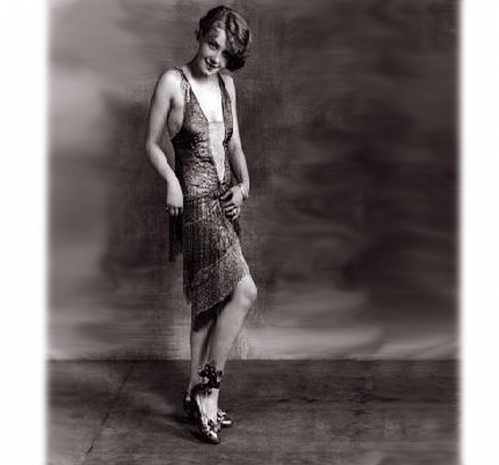
1920 Short Skirts | Flappers Show Their Knees | 1920s Flappers Showing Legs
1922, Flappers, The Flapper Magazine

Ode to Feminine Knees
(Flapper Magazine, 1922)

When the skirt hems began to rise in the Twenties, it was widely understood that the vision of a woman’s leg was a rare treat for both man and boy; a spectacle that had not been enjoyed since the days of Adam (married men excluded). The flappers certainly knew this, and they generally believed that suffering the dizzying enthusiasm of the male of the species was a small price to pay in order to secure some element of liberty. The flappers liked their hem-lengths just where they were and, thank you very much, they were not about to drop them. Attached are some verses by an anonymous flapper who expressed her reaction regarding all that undeserved male attention her knees were generating.

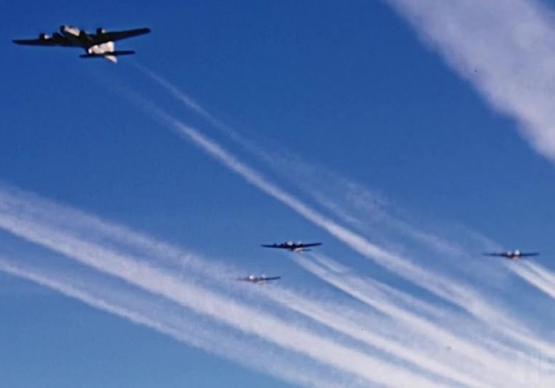
Allied Bombers Over Germany 1943 | Bombing of WW2 Germany
1943, German Home Front, Newsweek

Sticking It To Berlin
(Newsweek Magazine, 1943)

[Berlin,] the target of 69 RAF raids so far, [the city] has been hit hard only a few times this year and underwent no raids during 1942. On the morale front it ranks ahead of all other German cities. When the others were raided the outcry of the Germans was bitter but local. When Berlin hit groans rose from all over Germany. If RAF night raiders should raze the capital by fire, as they did Hamburg, the whole German nation would suffer the shock of Berliners… Goebbels begged them to stand up under bombs as stoutly as the British did in 1940.

Advertisement

Use shortcode [oma_ad position="summary_top"] (or other position) in your theme or widgets to display OMA Promotions here.

Scroll to Top