Author name: editor

Captain Eddy Rickenbacker: Fighter Pilot (The Literary Digest, 1919)
1919, The Literary Digest, World War One

Captain Eddy Rickenbacker: Fighter Pilot
(The Literary Digest, 1919)

This is a wonderful read in which the American World War One fighter pilot Eddie Rickenbacker (1890 – 1973), recounted his experiences in France. Arriving rather late in the game (March, 1918), he quickly racked up 26 kills, a Croix de Guerre, a Distinguished Service Cross, the Legion d’Honeur and the Congressional Medal of Honor (which would not be approved and awarded to him until 1930). He was the top Ace in the American Air Service. In his later life, he would go on to become one of the founders of Continental Airlines.

I learned pretty fast. Long practice in driving a racing-car at a hundred miles an hour or so gives first-class training in control and judging distances at high speed…

In his later life, Rickenbacker would go on to become one of the founders of Continental Airlines.


Click here to read an article about the development of aerial reconnaissance during W.W. I.


Read what the U.S. Army psychologists had to say about courage.

Charming White Russians in Exhile (Vogue Magazine, 1922)
1922, Manners and Society, Vogue Magazine

Charming White Russians in Exhile
(Vogue Magazine, 1922)

Princess Luciene Murat (1876 – 1951?), a distinguished member of the French nobility and a devotee to Paul Poiret, wrote this VOGUE article shortly after her return from Turkey in 1922. It is the sort of piece that could only be written by an over-indulged member of the post-war European high-society, which makes it all the more enjoyable to read. Her reminiscences of her visit to the city of Pera are especially interesting for the observations made regarding the White Russians of her acquaintance who reluctantly resided there in some discomfort.

Canadian WW1 Art Museum Article | Musée Canadien de la Guerre
1919, Artists, Vanity Fair Magazine

W.W. I Art and the Canadian War Memorial
(Vanity Fair Magazine, 1919)

An illustrated article from the chic Conde Nast magazine, VANITY FAIR, regarding one of the great Canadian disappointments of the immediate post-war years: the failure to build the Canadian war memorial building. By the summer of 1919 1,000 paintings and drawings depicting the experiences of the World War had been amassed with the intention of displaying them in a museum that was to serve as a remembrance to the Canadian servicemen of that war.


Throughout the Twenties and Thirties there were numerous advisory groups charged with the task of launching the museum, but they were never able to agree on key issues. With the outbreak of the Second World War the urgency of the project took root – and, finally, the Canadian War Museum was officially established in 1942 (and opend in 1967).


There are two paintings illustrating the article: Camouflaged Ships by E. Wadsworth and Strathcona Horse on the March by A.J. Munnings.

Advertisement

Use shortcode [oma_ad position="summary_top"] (or other position) in your theme or widgets to display OMA Promotions here.

C.R.W. Nevinson: Futurist on the Front (The Great War, 1918)
1918, Artists, The Great War Illustrated

C.R.W. Nevinson: Futurist on the Front
(The Great War, 1918)

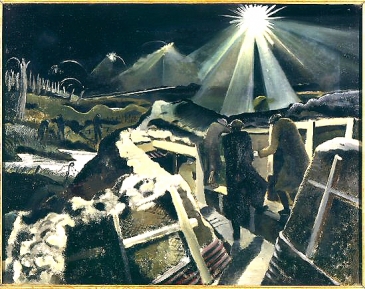
Attached you will find a segment from a longer article reviewing the W.W. I paintings of C.R.W. Nevinson (1889 – 1946). Trained by the Italian Futurist Severini, Nevinson made some of the most modern images of all the World War One artists:

C.R.W. Nevinson with unerring eye penetrated to the man behind the khaki and deliberately unveiled the son of toil. The hands of the foremost figures may be exaggerated (but probably not), and in any case they emphasize the essential truth that these men belong to the horny-handed class. They may not be beautiful, but they are strong…

Click here if you would like to read a 1922 article about C.R.W. Nevinson.

William Orpen and W.W. I (Literary Digest, 1923)
1923, Artists, The Literary Digest

William Orpen and W.W. I
(Literary Digest, 1923)

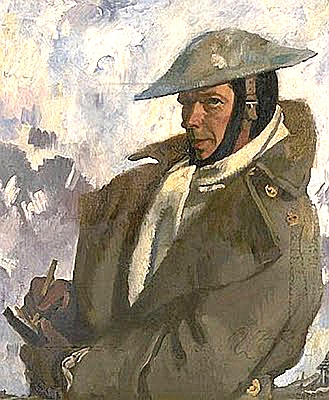
In the immediate aftermath of the First World War there were many eye witnesses to the slaughter who refused to remember it as a Noble Struggle. The chubby and comfortable fellows who ran the British Government couldn’t have known that the society portraitist William Orpen was one of these witnesses – but they soon found out when they commissioned him to make a pretty painting depicting all the pomp that was taking place at Versailles…

Advertisement

Use shortcode [oma_ad position="summary_top"] (or other position) in your theme or widgets to display OMA Promotions here.

World War I Pictures by British Artists Seen in America (Vanity Fair Magazine, 1919)
1919, Artists, Vanity Fair Magazine

World War I Pictures by British Artists Seen in America
(Vanity Fair Magazine, 1919)

The attached VANITY FAIR art review by Christian Brinton (1870 – 1942) covered the first public exhibition of the British War Artists to be shown on American shores (1919):

A direct product of war and war conditions, it reflects not only the varied aspects and incidents of the great struggle, but but also the actual state of British artistic taste at the present moment…England has been the first to enlist the services of the artist, and the readiest to grant him the measure of official standing so manifestly his due.


Launched jointly by the British Ministry of Information and the Worcester Art Museum, the exhibit was comprised of almost 250 paintings. This review discusses the art of Paul Nash, Muirhead Bone, Sir John Lavery, James McBey,Sir William Orpen, Augustus John, C.R.W. Nevinson, John Everett, Frank Brangwyn and Eric Kennington.

ww1 War-Artists
1917, Artists, The Literary Digest

The Future of War-Artists
(Literary Digest, 1917)

Just as the American poet Walt Whitman once remarked concerning the American Civil War – that the real war will never make it into books, so goes the thinking of the ink-stained wretch who penned the attached column regarding the efforts of the Official War Artists during W.W. I – who attempted to render accurately the horrors of war. Such genuine indecency could never allow itself to be duplicated into a two or three dimensional format.

FRANCE AROUSED: Created by Jo Davidson (Vanity Fair Magazine, 1917)
1917, Artists, Vanity Fair Magazine

FRANCE AROUSED: Created by Jo Davidson
(Vanity Fair Magazine, 1917)

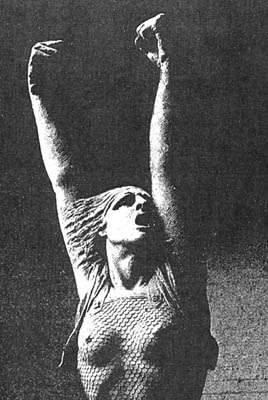
An illustrated article about the American sculptor Jo Davidson (1883 – 1952) and his creation, FRANCE AROUSED. The Davidson piece, a colossal depiction of France as an outraged warrior queen, was intended for the French village of Senlis to serve as a memorial to that remarkable day in September, 1914, when the German drive on Paris was stopped and driven back. It was at Senlis where the earlier successes of the German Army were reversed.

To those in America and Europe who believed in the new doctrine of political equality, it was the most thrilling day in her history.

When France in wrath
Her giant – limbs

upreared,
And with that oath,
Which smote air,
Earth and sea
Stamped her strong
foot and said she
Would be free.

The statue, which is twenty feet high, was made in the sculptor’s studio in McDougal Alley (NYC), where it was photographed for the pages of VANITY FAIR.

In 1919, Jo Davidson would endeavor to create a number of busts depicting the various entente statesmen who participated in the Peace Treaty.
Advertisement

Use shortcode [oma_ad position="summary_top"] (or other position) in your theme or widgets to display OMA Promotions here.

Muirhead Bone at the Front (Times Literary Supplement, 1918)
1918, Artists, The Times Literary Supplement

Muirhead Bone at the Front
(Times Literary Supplement, 1918)

A book review covering a collection of drawings by one of the Official War Artists, Muirhead Bone (1873 – 1953). The book was titled, and it is not surprising to read that it was published by Country Life. The reviewer was not at all impressed with the artist’s renderings of, what was at that time, the most dangerous place on planet earth:

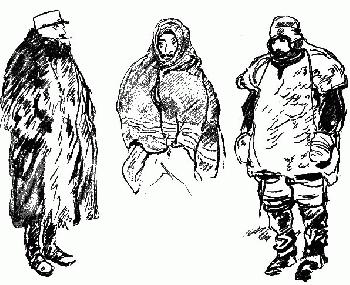
In these drawings Mr. Muirhead Bone has resolutely refused to become a journalist. He has not allowed the novelty of his subject-matter to affect his treatment. There he differs from Mr. Nevinson. Mr. Nevinson in his pictures of the war is not a journalist but at least an illustrator.

Nonetheless, Sir Douglas Haig wrote a supportive introduction to the book. Wilfred Owen (1893-1918) found his drawings to be highly inaccurate at best.

Advertisement

Use shortcode [oma_ad position="summary_top"] (or other position) in your theme or widgets to display OMA Promotions here.

Social Issues in Movies (Stage Magazine, 1938)
1938, Hollywood History, Stage Magazine

Social Issues in Movies
(Stage Magazine, 1938)

Aren’t you tired of Hollywood’s socio-political rantings?

•Nuclear power…………….They’re against it (The China Syndrome).
•Antisemitism……………….They’re against it (Gentleman’s Agreement).

•Alcoholism………………….They’re against it (Lost Weekend).
•Racial segregation………..They’re against it, but in 1915 they were for it (Birth of a Nation).

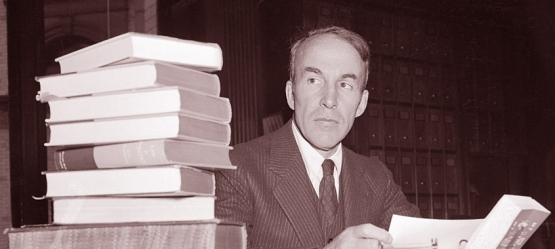
One glance at this 1939 article and you’ll be able to blame it all on the poet Archibald McLeish (1892 – 1982) who clearly advocated for political posturing in American movies.

No doubt, McLeish must have been very happy when Warner Brothers released Confessions of a Nazi Spy in April of 1939; it was the first Hollywood film to take a swipe at the Nazi war machine.

Ode to the Hollywood Agent (Rob Wagner's Script Magazine, 1942)
1942, Hollywood History, Rob Wagner's Script Magazine

Ode to the Hollywood Agent
(Rob Wagner’s Script Magazine, 1942)

The literati have all agreed: there is no doubt that if Shakespeare were alive today he would live in Beverly Hills, California. He would dwell in a 1930s split-level Persion-conversion, probably on Palm or Roxbury. As a well-compensated screenwriter he would churn-out the standard plots that were expected of him: fish-out-of-water dramadies, romcoms, and (under assorted pen names) a few reality shows; and like the poet whose work is attached, he would write about matters unique to Southern California -valet parking, Cobb Salads -and in this case the Hollywood agent.

This poem was written by Sydney King Russell (1898 – 1976), who, like Shakespeare, knew that if you’re going to write a poem about Hollywood agents, you’ll need to crack open the ol’ rhyming dictionary to see what rhymes with ten percent.

Cosmetic Surgery in Hollywood (Photoplay Magazine, 1930)
1930, Hollywood History, Photoplay Magazine

Cosmetic Surgery in Hollywood
(Photoplay Magazine, 1930)

Published in a 1930 Hollywood fan magazine, this is the story of the earliest plastic surgeons and the rise of cosmetic surgery in Hollywood:

Telling the actual names of all the stars who have been to the plastic surgeons is an impossible task. They won’t admit it, except in a few isolated instances…It is only lately that a few of them are beginning, not only to to admit that they’ve had their faces bettered, but to even go so far as to publicly announce it.

Advertisement

Use shortcode [oma_ad position="summary_top"] (or other position) in your theme or widgets to display OMA Promotions here.

When Prestige was Thrust Upon Hollywood's ''Cameramen'' (Stage Magazine, 1937)
1937, Hollywood History, Stage Magazine

When Prestige was Thrust Upon Hollywood’s ”Cameramen”
(Stage Magazine, 1937)

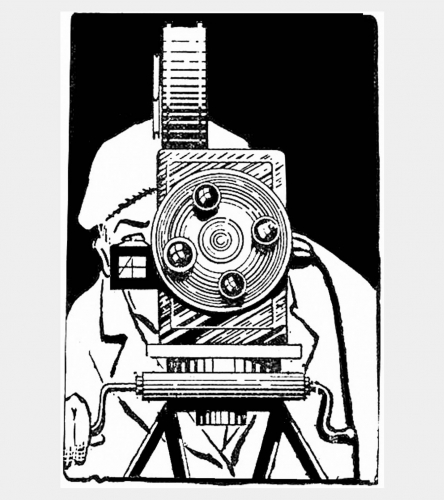
Shortly before this article went to press, that particular member of the Hollywood film crew called the director of photography (DP) was treated a wee-bit better than other crew members were likely to be treated (but not that much better). Granted, the director and producer knew his name and his body of work – but his screen credit was still mixed among all the other names of the crew (if listed at all) – and this article points out that much of that changed in the Thirties.

Mayor Fiorello LaGuardia (Coronet Magazine, 1956)
1956, Coronet Magazine, Old New York History

Mayor Fiorello LaGuardia
(Coronet Magazine, 1956)

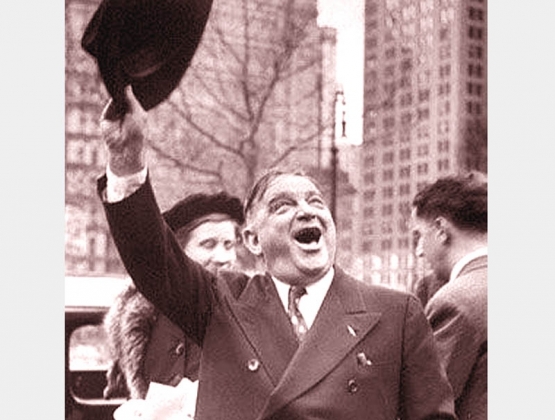
An exceptional article about Fiorello LaGuardia (1882 – 1947), who is remembered to have been one of the great mayors of New York City (1934 – 1945). Written by a fellow who knew him well, you get a sense of his energy, humor and strong sense of civic duty:

At exactly midnight on January 1, 1934, Fiorello H. LaGuardia took the oath of office as Mayor of New York City. At exactly one minute after midnight, he ordered the arrest of the most notorious gangster in town: Lucky Luciano. This jet-propelled momentum never let up during the next 12 years.


The article is composed of a series of anecdotes that clearly illustrate his humanity, making you feel somewhat at a loss for never having known him yourself.


Even today, LaGuardia’s memory is so revered that New Yorkers conveniently forget that he was a Republican.


Click here to read about the NYC air-raid wardens of W. W. II…

Dormant Capital (Pathfinder Magazine, 1934)
1934, Pathfinder Magazine, The Great Depression

Dormant Capital
(Pathfinder Magazine, 1934)

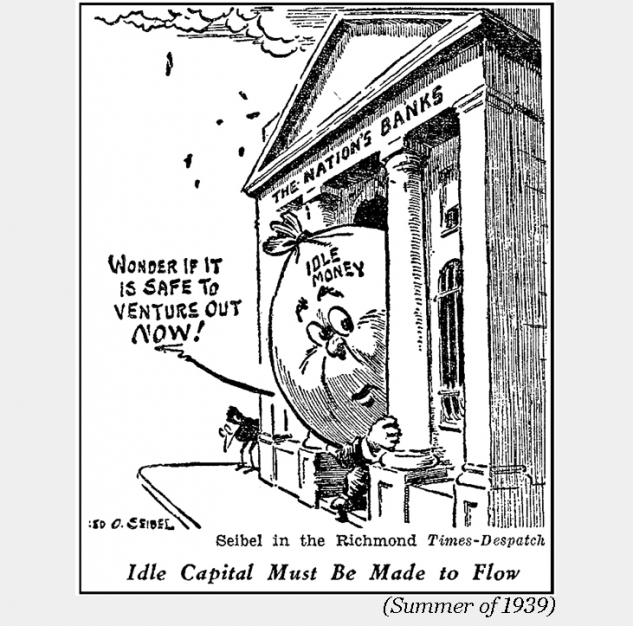
This article reported on a phenomenon that is common in our own day as well as the era of the Great Depression. It exists in any locale that fosters a lousy environment for business – for when the entrepreneurial classes loose their daring for investing in commercial ventures and when bankers refuse to loan money for fear that they will never be paid back, it leads to the creation of what is called dormant capital – money that should be working, but isn’t.

There is now piled up in banks some $46,000,000,000. As opposed to $39,000,000,000 at the low point of 1933, and the idle capital is on the increase. World trade has virtually broken down.


As one editorial makes clear, FDR had a tough time freeing up private capital for investments, click here to read it.

Advertisement

Use shortcode [oma_ad position="summary_top"] (or other position) in your theme or widgets to display OMA Promotions here.

Scroll to Top