

































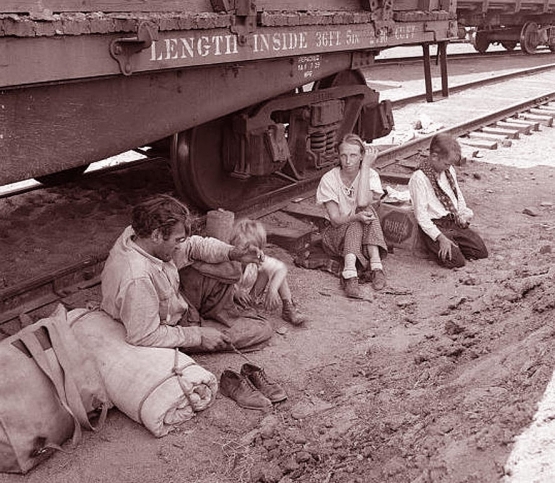
“We know that half the feet that shuffle wretchedly along the streets once wore shiny new shoes, at least on Sundays – or reposed under mahogany desks, or even upon them. [Now] they stand in the doorways and watch for a kind face – each snarl of refusal brings them a little nearer the nadir of their self-respect. They were not born to the purple of beggary. They wear glasses, most of them, and it is an obvious truism that few denizens of the blind baggage ever have their eyes examined, the better to read Spinoza or Hegel. They straighten their spotted ties. They wash their shirts and handkerchiefs in the lake each morning. They wipe their wayward shoes with newspapers and they brush their dirty clothes with their dirty hands. They try to stop a prospective philanthropist without being seen by the passing crowds and they do not look up, ever.”
“These men are no bums. Half the day they are trying to get work, knowing they can’t and, half the day they are trying to get money, somehow, to keep them, and too often wives and children, alive. It is pretty sad… They tell me there are 1,558,843 ‘gainful workers’ in Chicago, a conservative 75,000 of whom are out of gainful work. At least 130,000 families are subsisting entirely on charity. The third winter is coming up… Some of the half million will die this winter – some died last winter and the winter before. The soup lines and relief stations will be crowded with deserving and undeserving, and there is no one to differentiate… The communists, or perhaps I should say Communists, are getting along very poorly. Communism, like all great institutions, requires a certain amount of cash on hand… Observations on a modest scale has convinced me that there will be no revolution, even if Hoover is reelected.”
– from Amazon:


